Amari No Kokoro And Going Beyond Words
Solving many professional challenges requires a special type of attention.
Often, we don’t deliberately choose what we listen to and what we look at. And then something we overlook or overhear can reinforce an unwanted pattern. If you don’t notice that your counterpart in a negotiation is afraid of something and continue to barrage them with more arguments, they will just become more defensive.
How can we focus our attention differently?
Many years ago I saved a quote:
Basho didn’t just write haiku; he showed us the way of being an artist in the world, of connecting with life, of being immersed in the moment. He stressed amari—no-kokoro, which he explains as “the heart/soul of the poem must reach far beyond the words themselves, leaving an indelible aftertaste.”
‘Indelible aftertaste’—what a mesmerizing way to put it!
This quote had a huge impact on how I encounter poems and how I strive to encounter people and situations in my life.
Let’s try it together. This one is by Basho:
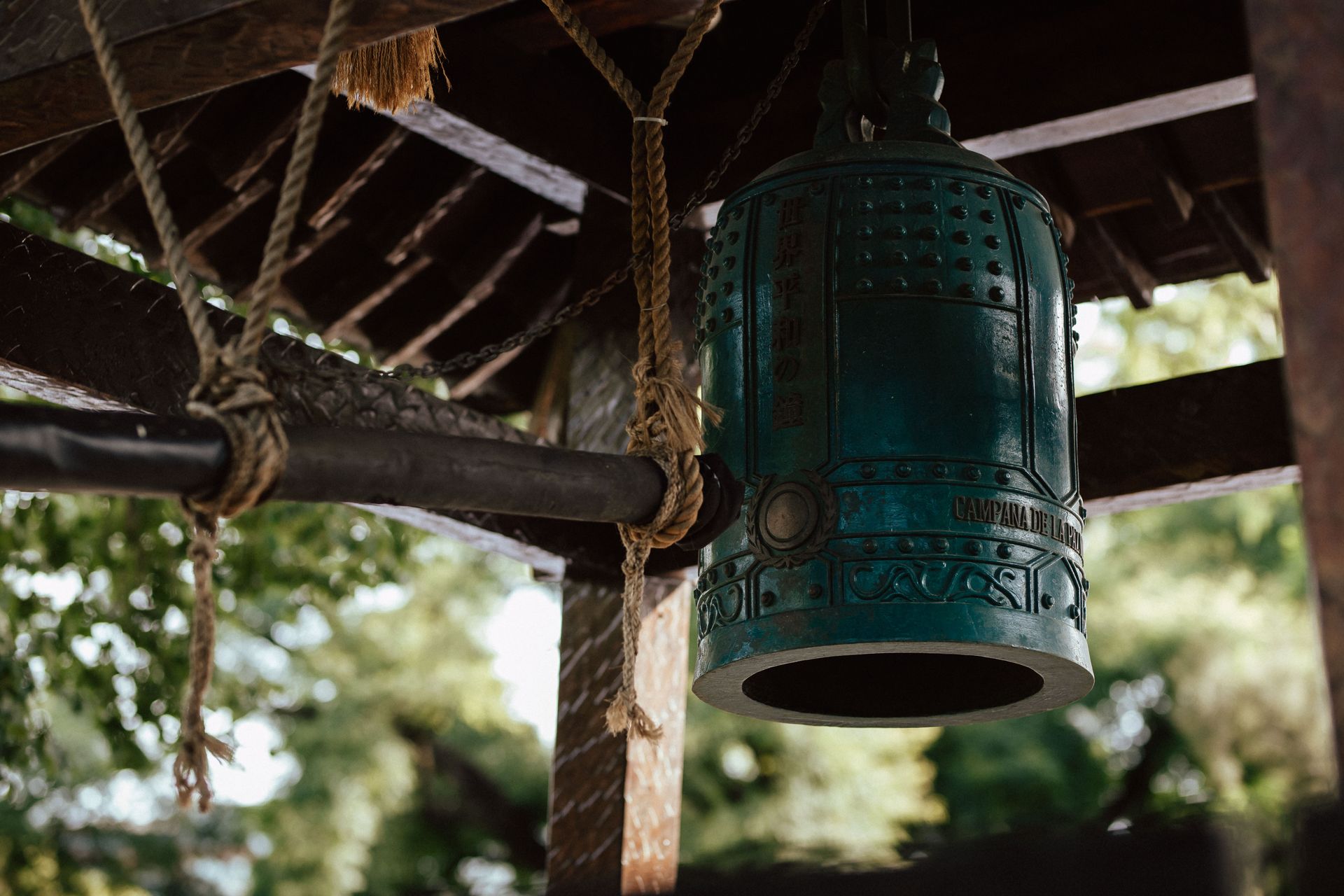
The temple bell is done.
But the sound keeps ringing
out of the flowers.
Can you sense it? Can you notice how the poem touches you?
Or this one by Kobayashi Issa:
Corner spider
Rest easy, my soot-broom
Is idle
There is so much in it if we can rest our attention on the aftertaste rather than try to analyze the poem or try to think what it ‘means’.
A poem should not mean
But be
– wrote Archibald MacLeish
When we start attaching meaning to a poem or to an event too soon, we can miss its aftertaste. Closure bias. Not one you’d typically find in different compilations of biases.
Everything has dense texture. We can experience it and touch it with our senses. Or we just don’t turn away from it.
We can understand savoring such a texture when it comes to food and art. But this way you can savor anything. And often our professional and personal, psychological and spiritual growth unfolds as we savor and slowly receive everything there is in front of us.
The indelible aftertaste is something we are left with after every event and encounter in our life. We can, mindlessly, let it pass. Or we can stay with it, appreciating its texture more fully and gaze into what’s there. If we stay long enough there, this aftertaste can teach us a lot about what happened.
Often, though, this dense texture is shrouded in mundane everydayness so much that it’s barely noticeable. We miss it, but its gravity continues affecting us and probably keeps us repeating the same scenarios. Then, to get in touch with this indelible aftertaste, we need some kind of interruption.
Powerful art interrupts us. In the same way, unexpected feedback can interrupt us and draw our attention to what was always there, but we didn’t pay attention to it.
An avant-garde composer, John Cage, wrote his famous piece 4’33” as a provocation and interruption. It’s a silent piece—the score is empty, the pianist is to play ‘silence’ for 4 minutes 33 seconds. When the pianist plays nothing, the audience is bound to notice everything else that lay in the background before. The whole hidden sonic realm comes to the forefront: fidgeting, coughing, breathing, nervous laughs, as well as our reactions to this sonic realm.
When we step into implicit but well-defined roles of audience participants, we direct our attention to certain phenomena and turn away from everything else. Our social roles carry us into a certain way of being. But once the rug of these roles is pulled from our feet, we, stumbling at first, get present and start seeing and hearing something that always was here but we just didn’t pay attention to. We, as T.S. Eliot put it, ‘arrive where we started and know the place for the first time.’
This is often what coaching helps with. We, coaches, help people look more intensely and listen more intensely. We help people look beyond the words and labels they attached to an event into the experience of it. We swim in the ocean of data, most of it we won’t ever be able to take in. But if we want to get to a desired place in our life and not just be carried somewhere by the ocean, we need to be able to connect better to this ocean and all its currents.
In his beautiful poem ‘One Train May Hide Another’ Kenneth Koch urges us to wait and see:
words stand in front of objects, feelings, and ideas…
It can be important
To have waited at least a moment to see what was already there.